4.9 Stars | 5,276 Reviews





Is your water heater acting up? Don’t let a cold shower ruin your day! Act fast to fix water heater issues before they escalate. Call Wisler Plumbing, Heating, Cooling & Electric for immediate service. We’re here to provide expert water heater repair, replacement, maintenance, and installation services to residents of Roanoke, VA, and the surrounding areas.

We Repair and Replace All Types and Brands of Water Heaters.
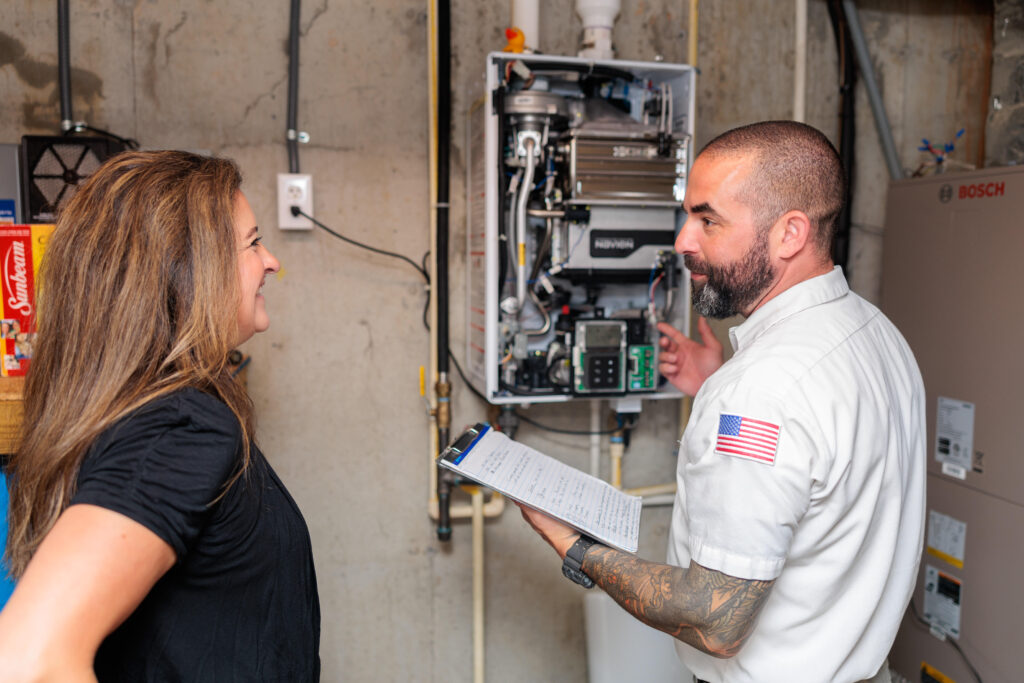
Diagnosis and Options: We diagnose and provide clear options to restore your system’s functionality. Diamond Club Family Members enjoy reduced fees.
Straightforward Pricing: You’ll receive a transparent cost estimate upfront, regardless of job duration. Pay only once you’re fully satisfied with our service.
Same-day, Free Estimates: We repair and replace all types of water heaters promptly, including electric, gas, tank, tankless, and heat pump models.
In some cases, water heater problems require immediate attention. Lucky for you, Wisler Plumbing, Heating, Cooling & Electric offers emergency repair services in these cases. If you notice a significant leak or your water heater is overflowing, call us right away. No matter day or night, we’re there for you. Contact us today for all your water heater repair, replacement, maintenance, and installation needs in Roanoke, VA and the surrounding areas.

A complete loss of hot water usually means a failed heating element or thermostat on an electric unit, a pilot light or ignition failure on a gas unit, or — on an older tank — a fully failed unit near the end of its lifespan. If your water heater is under 8 years old, this is typically a straightforward repair. We diagnose the exact cause on-site and give you a fixed price before starting any work.
Lukewarm water is often caused by a thermostat set too low, a partially failed heating element (on units with two elements, one can fail while the other still works), or sediment buildup insulating the burner or element from the water. It can also mean your tank is undersized for your household’s demand. We’ll pinpoint the cause and let you know whether it’s a quick fix or a sign the unit needs replacing.
A shrinking hot water supply is commonly caused by sediment buildup taking up space in the tank, a failing heating element that can’t keep up with demand, or a broken dip tube that’s letting cold water mix in at the top of the tank. Annual flushing can prevent much of this — it’s included with our Diamond Club Membership maintenance visits.
Seeing rusty or brown water coming out of your shower or sinks can be unsightly. Different colors mean different things. Usually, rusty water is a sign of corrosion inside the water heater tank. If your water is cloudy, brown, or green, this could be caused by sediment buildup or other issues.
Temperature swings are typically caused by a struggling thermostat, sediment interfering with heat transfer, a tank that’s too small for simultaneous hot water use in the house (like a dishwasher running during a shower), or — on tankless units — a flow rate below the unit’s minimum activation threshold. We check both the equipment and your household’s usage pattern to find the actual cause.
Hearing weird sounds coming from your water heater can sometimes remind you of a scary movie! If you hear unusual sounds like popping, rumbling, or banging, it could mean there’s internal problems that need to be looked at and addressed by a professional.
The water should stay inside the tank. If you notice water outside of it, then this is cause for concern! Any leaks from your water heater are a serious issue that need to be addressed promptly. They could indicate a cracked tank, loose connections, or other problems.
Is your water heater not turning on at all? That’s not good! This could mean there’s an issue with the power supply, gas supply, or the water heater’s control system.
Most tank water heaters last 8–12 years. If yours is in that range and showing rust-colored water, rumbling noises, or inconsistent temperatures, it’s worth having it inspected rather than waiting for a full failure.
If the unit is under 8 years old with an isolated issue like a heating element or thermostat, repair usually makes sense. Past that age, or with tank leaks or rust in the water, replacement is typically the smarter long-term investment.